Why is FDA compliance crucial for pet product exporters?
If your pet products are exported to the United States but are detained, destroyed or returned by customs due to non-compliance with the FDA regulations, you may suffer losses of tens of thousands of dollars and even lose the trust of your customers.
In 2026, the US FDA will impose stricter regulations on pet food contact materials, feeding devices, water dispensers, and food-grade plastic products. In particular:
- Safety of food contact materials
- Material migration test report
- Label and declaration norms
- Enterprise registration and filing
For B2B pet product wholesalers, brand owners and retailers, compliance is not merely a legal issue; it is also a matter of commercial risk management.
Core requirements of the FDA for pet food contact products in 2026
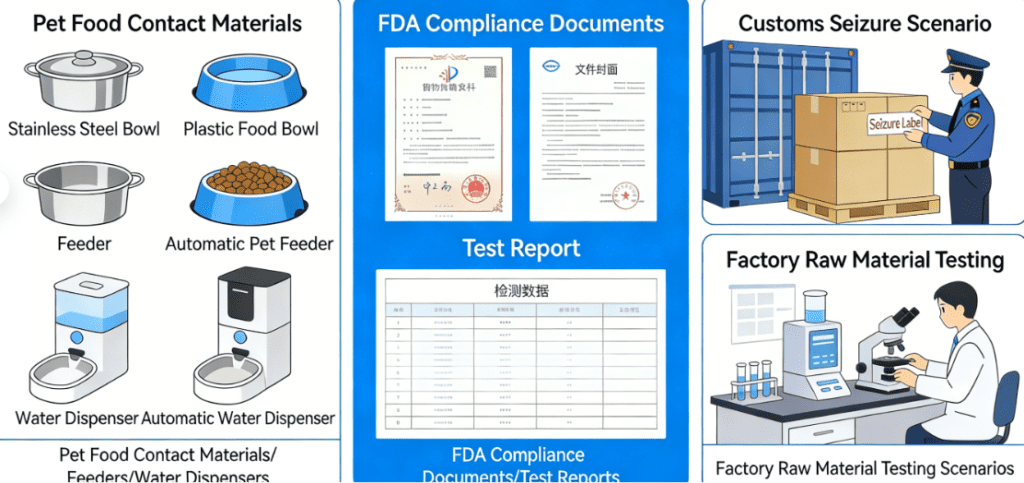
1.FDA Food Contact Materials Regulations (CFR 21)
The US FDA manages food contact materials in accordance with 21 CFR (Code of Federal Regulations), including:
- Food-grade PP / ABS / Tritan / Stainless Steel
- Silicone material
- BPA-free material
- Food-grade coating
All materials must:
- No release of harmful contaminants
- Complies with specific substance limits
- Can provide Declaration of Compliance
Note: Just marking “Food Grade” is not sufficient; there must be legal basis.
2.Requirements for Third-Party Testing Reports
For products such as pet feeders and water dispensers exported to the United States, the following features are recommended:
- FDA Food Contact Materials Test Report
- Heavy Metal Migration Test
- BPA Test Report
- LFGB (if applicable)
- California Proposition 65 Declaration (if applicable)
Common Errors:
- Using expired reports
- The reports do not match the actual materials
- The test standards do not correspond to the CFR provisions
3.Label and Product Declaration Specifications
The FDA has strict regulations on product labels and promotional statements:
Prohibition:
- False functional promotion
- Medical or therapeutic implications
- Unverified “100% safe” claims
Must:
- Clear material description
- True origin information
- Company manufacturer information
For cross-border e-commerce sellers, it is also necessary to ensure:
- Compliance on Amazon / Chewy / Walmart platforms
- Product description is consistent with the test report
What documents are needed for importing pet supplies to the United States?
If you are a factory or a brand owner, when exporting pet food products that come into contact with the product, the following requirements usually apply:
1.Commercial Invoice
2.Packing List
3.FDA Compliance Declaration
4.Third-party Test Report
5.Product Material Specification
6.Customs Code (HS Code)
During customs inspections, if complete documents cannot be provided, it may result in:
- Customs seizure of goods
- Compulsory testing
- Product return
- Long-term blacklist record
Common FDA Compliance Mistakes (Mistakes Often Made by Many Sellers)
Misconception 1: Pet supplies do not fall under the category of food contact items.
- Error.
- Pet feeders, water dispensers, grain storage tanks, etc. all fall under the category of food contact products.
Misconception 2: Exporting to the United States can be achieved simply by obtaining the CE certification.
- Error.
- CE is an EU standard, and the US market does not recognize CE as a substitute for FDA.
Misconception 3: Small-scale exports do not require compliance.
- Error.
- The US customs conducts random inspections and it has nothing to do with the quantity of goods.
How to ensure that your pet products meet FDA requirements?
As a manufacturer with many years of experience in exporting pet products, we suggest:
Step 1: Comply with regulations at the source of the materials
- Select raw materials that comply with FDA CFR 21
- Require the raw material suppliers to provide a compliance statement
Step 2: Conduct regular third-party testing
- Every material change must be retested.
- Keep the complete test files.
Step 3: Standardize product promotional copywriting
- Avoid medical implications
- Use “meets FDA food contact standards” instead of “FDA certification”
Why do B2B buyers place greater emphasis on FDA compliance?
For American retailers:
- Non-compliant products may result in huge fines
- Affect brand reputation
- May trigger product recalls
Therefore, large purchasers usually require the following before placing an order:
- Copy of the test report
- Compliance documents
- Factory qualifications
- Audit materials
If you are unable to provide it, the order is likely to be lost directly.
2026 Forecast of Pet Products Export Trends
The future trends include:
- More rigorous material traceability
- Compulsory online filing system
- Higher transparency in supply chain review
- Platform automatic compliance verification
For pet product manufacturers, taking proactive measures to ensure compliance will become their core competitiveness.
Conclusion
FDA compliance is not a cost; rather, it is an investment in reducing risks and enhancing brand trust.
For pet product export enterprises:
Compliance capability = Market access capability = Long-term profit capability
If you are looking for pet feeders, water dispensers or food-grade pet products that meet American standards, please feel free to contact us. We will provide you with comprehensive compliance support and product solutions.