Dogs need more than food, water, and a comfortable place to sleep. They also need opportunities to explore, chew, play, and use their natural problem-solving abilities. When these needs are not met, some dogs may start chewing furniture, barking for attention, or repeatedly searching for something to do.
A treat-dispensing dog toy can turn an ordinary snack into an interactive activity. Instead of eating treats immediately, a dog has to push, roll, or chew the toy to release the reward.
But how do these toys work, what should you look for when choosing one, and how can you make playtime more rewarding for your dog? Here is what dog owners need to know.
Why Do Dogs Get Bored at Home?
A dog can have plenty of toys and still lose interest in them. The problem is not always the number of toys available. It may be that the toys offer little variety or do not encourage active engagement.
Common signs that a dog may need more enrichment include:
- Chewing shoes, cushions, furniture, or other inappropriate objects.
- Losing interest in toys after only a few minutes.
- Constantly seeking attention when the owner is busy.
- Repeatedly pacing or looking for activities around the house.
- Eating treats quickly and immediately asking for more.
These behaviors can have different causes, including insufficient exercise, stress, separation-related distress, or unmet behavioral needs. Boredom is only one possible explanation.
Adding short, engaging activities to a dog’s daily routine can help provide a more appropriate outlet for curiosity and chewing. Treat-dispensing toys are one option, especially when combined with walks, training, sniffing games, and interactive play.
What Is a Treat-Dispensing Dog Toy?
A treat-dispensing toy is an interactive toy that releases small amounts of food or treats when a dog moves it in a particular way.
Depending on the design, the dog may need to roll a ball, push a toy across the floor, manipulate an opening, or chew around a designated treat area.
Unlike a regular treat, which is usually consumed immediately, a dispensing toy makes the dog work for the reward. This introduces a simple problem-solving task into snack time.
There are several common types:
- Rolling treat balls: Dogs push or roll the ball to release food. These are often suitable for movement-based play.
- Puzzle feeders: Dogs must manipulate compartments or moving parts to access food. They can offer more structured problem-solving challenges.
- Chewable treat dispensers: These combine a chewable body with openings for treats, allowing dogs to explore the toy through chewing and movement.
- Interactive bouncing toys: Toys with an unpredictable bounce encourage chasing and retrieving, adding physical movement to food-based play.
The best choice depends on your dog’s size, chewing habits, experience with interactive toys, and preferred style of play.
How Can Treat-Dispensing Toys Help Keep Dogs Engaged?
1. Turn Snack Time into an Activity
A dog that eats a treat in seconds may benefit from a toy that requires several movements to release food.
As the dog nudges, rolls, and investigates the toy, the reward becomes part of a small activity rather than an instant snack. This can add variety to the daily routine and encourage exploration.
Keep in mind that engagement time varies. Treat size, opening design, food type, and the dog’s experience all affect how long a toy holds its attention.
2. Give Chewing a More Appropriate Outlet
Chewing is a normal canine behavior. The challenge is directing it toward appropriate objects rather than shoes, table legs, or household accessories.
A chew-friendly interactive toy can provide another option for dogs that enjoy using their mouths during play.
Look for rounded edges, a suitable size, and a material appropriate for your dog’s chewing strength. No dog toy is indestructible, and toys should be removed if they develop cracks, loose pieces, or other damage.
3. Combine Movement with Mental Stimulation
A toy that bounces or moves unpredictably may encourage a dog to chase it, retrieve it, and investigate where it will go next.
This creates a different experience from chewing a stationary toy. It can be especially useful when you want to alternate between food-based enrichment and active play.
For the best results, combine toy sessions with walks, training, and direct interaction rather than relying on a single toy to meet every exercise need.
4. Add Variety to Your Dog’s Daily Routine
Dogs can become less interested in toys that always offer the same experience. Rotating a few suitable toys and changing how treats are presented can help keep activities interesting.
For example, you could use a treat dispenser during a short indoor play session, a sniffing game later in the day, and a regular fetch session when space permits.
Start with an easy challenge. If your dog cannot get the treats out, try a different treat size or a more accessible filling rather than making the task increasingly difficult.
How to Choose the Right Treat-Dispensing Toy
Not every toy works for every dog. Before choosing one, consider these five factors.
Material and Chewing Strength
A toy should match the dog’s actual chewing behavior, not just its breed or body weight.
For dogs that enjoy chewing, look for a clearly described material and construction. A thicker body may offer more substance than a thin-walled design, but thickness alone does not prove that a toy is suitable for aggressive chewers.
Check the manufacturer’s intended use and inspect the toy regularly.
Treat Openings and Food Size
The opening should work with the food you plan to use. If the treats fall out immediately, the challenge may be too easy. If they cannot pass through the opening, your dog may quickly lose interest.
Begin with appropriately sized dry kibble or small treats recommended for the product. Avoid food pieces that could become lodged or create a choking risk.
Shape and Movement
A rolling ball, a puzzle board, and a bouncing chew toy offer different play experiences.
If your dog likes chasing moving objects, consider a design that encourages rolling or bouncing. If your dog prefers investigating food, a puzzle-style dispenser may be a better fit.
Ease of Cleaning
Treat residue can collect around openings and textured surfaces. Choose a toy that can be cleaned according to the manufacturer’s instructions.
Rinse away leftover food after use, check the openings for trapped residue, and allow the toy to dry before storing it.
Safety and Supervision
Choose a toy that is appropriate for your dog’s size and chewing style. Introduce it during a supervised session, particularly if your dog tends to destroy toys or swallow pieces.
A treat-dispensing toy is not a substitute for supervision when a dog is anxious, distressed, or likely to damage and ingest parts of a toy.
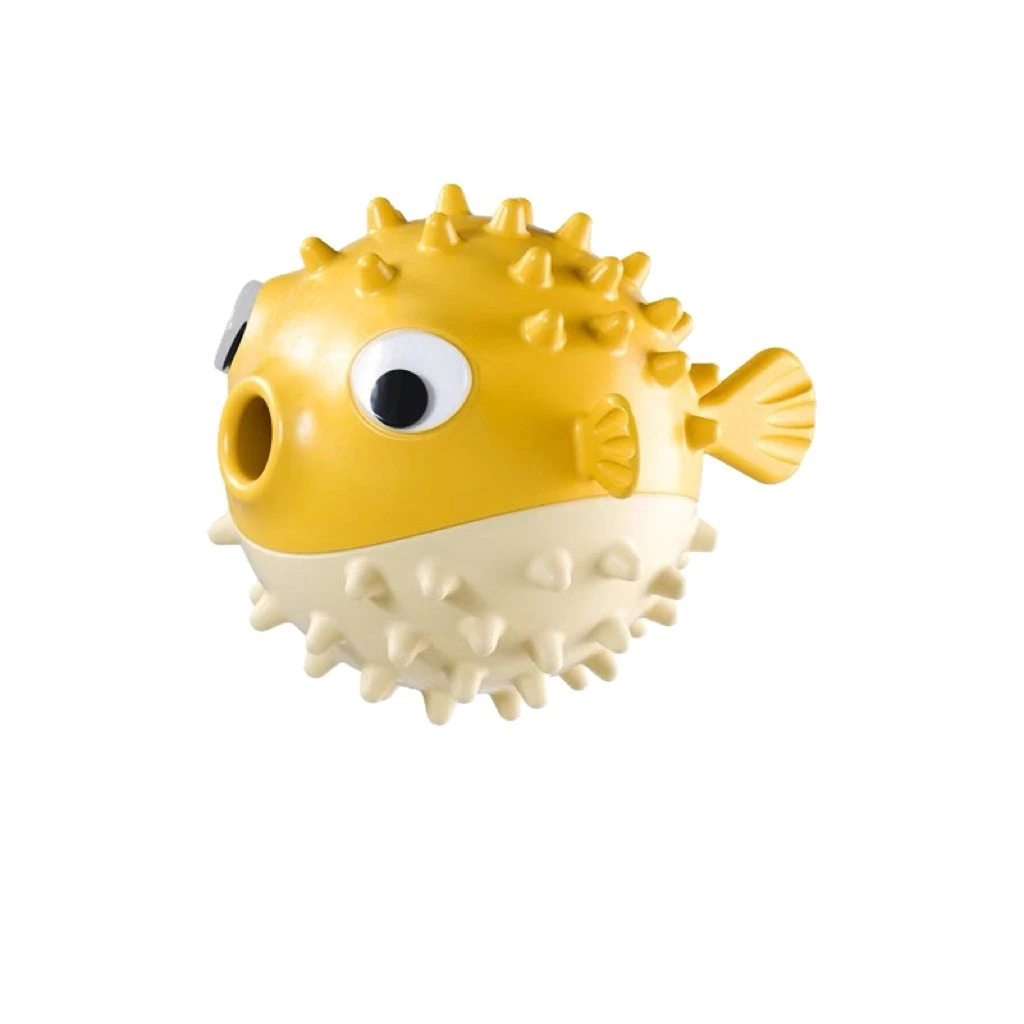
A Closer Look at a Pufferfish-Shaped Treat-Dispensing Dog Toy
For dog owners looking to combine chewing, food rewards, and active play, a multi-function design can offer more than one way to interact.
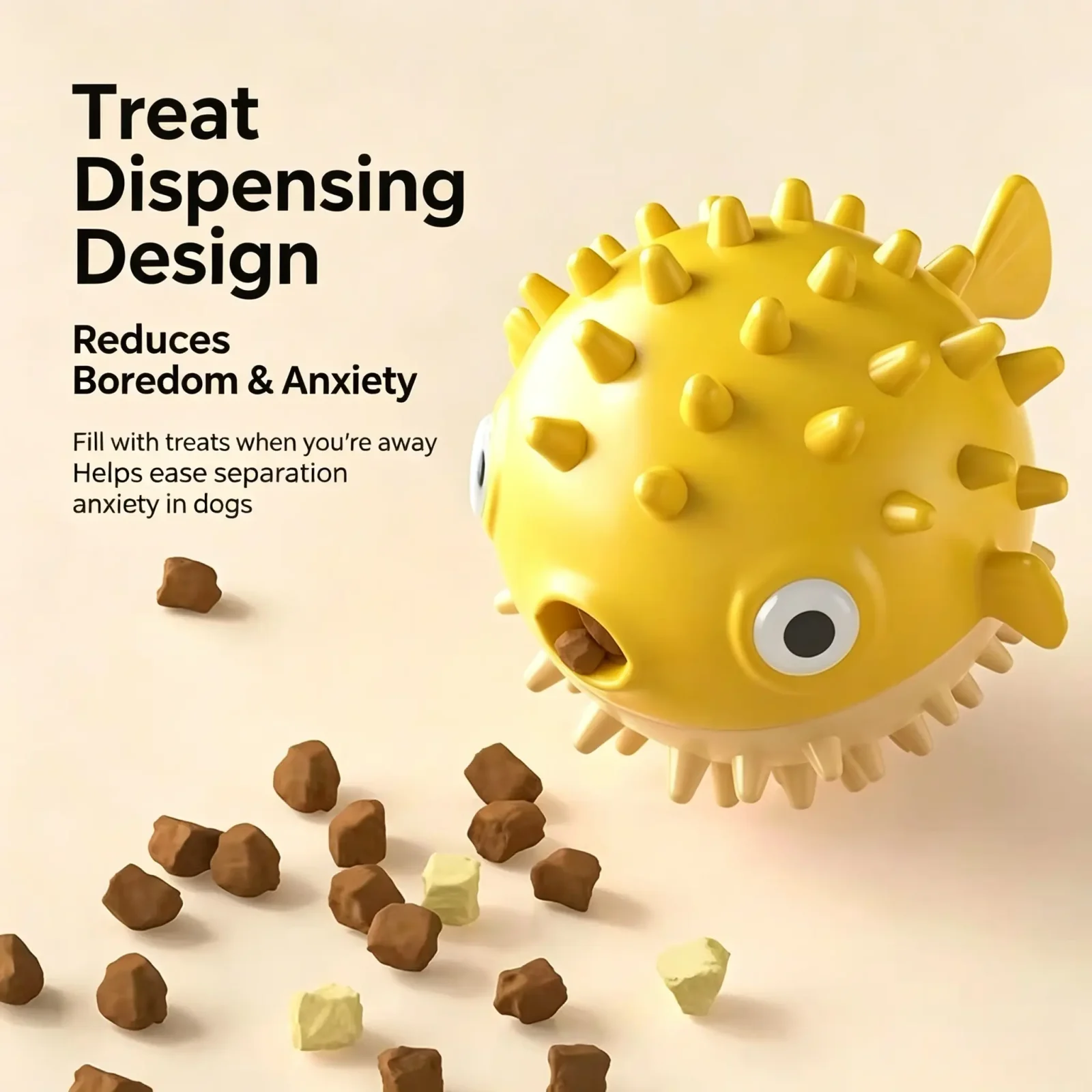
The features a distinctive pufferfish shape and a thickened TPR body. Its built-in treat openings allow dogs to work for kibble or snacks by moving and chewing the toy.
Here are the main design features to consider:
- Treat-dispensing openings: Make food part of the play experience instead of offering every reward by hand.
- Bouncy movement: The product specification lists rebound of up to 65%, encouraging chasing and movement during play. Actual movement depends on the surface and how the toy is used.
- Rounded raised nubs: The textured surface is designed to provide a chew-friendly feel and gentle gum massage. It should not be treated as a replacement for brushing or professional dental care.
- Thickened TPR construction: The product page describes food-grade TPR and a design intended for repeated chewing. Always check the applicable product documentation and choose a toy suited to your dog’s chewing strength.
- Simple rinsing: The product is designed to be rinsed with clean water after play, helping make routine cleaning more convenient.
The combination of treat dispensing, chewing, and bouncing gives dogs different ways to explore the same toy. However, no design guarantees that every dog will enjoy it or that it will prevent destructive behavior.
How to Introduce a Treat-Dispensing Toy
A few simple steps can make the first session easier.
Step 1: Start with a familiar treat. Use a suitable food your dog already enjoys, provided it fits the toy’s opening and is safe for your dog.
Step 2: Make the first challenge easy. Allow your dog to discover that moving the toy releases food. Avoid starting with a filling that is too difficult to extract.
Step 3: Demonstrate the movement. Gently roll or move the toy so your dog can see how the reward works.
Step 4: Observe your dog’s response. If your dog becomes frustrated, simplify the challenge. If your dog begins biting off pieces, stop the session and reassess the toy’s suitability.
Step 5: Clean and inspect the toy. Remove leftover food, rinse it as directed, and check for damage before the next use.
Veelgestelde vragen
Can a treat-dispensing toy stop my dog from chewing furniture?
It may provide an alternative activity for some dogs, but it cannot guarantee that furniture chewing will stop. Make sure your dog receives adequate exercise, appropriate chew items, and training. Persistent or sudden destructive behavior may need further assessment.
Can I put regular kibble inside a treat-dispensing toy?
That depends on the opening size and the manufacturer’s instructions. Use food that fits easily and cannot become lodged. Test the toy during supervised play before incorporating it into a regular routine.
Are treat-dispensing toys suitable for puppies?
Some are, but the toy must be appropriate for a puppy’s size, developing teeth, and chewing behavior. A toy intended for stronger adult chewers may not be suitable.
How often should I clean the toy?
Remove food residue after each use and follow the manufacturer’s cleaning instructions. Inspect the toy regularly for damage and replace it when necessary.
Make Everyday Play More Rewarding
A good treat-dispensing toy combines an achievable challenge with an appealing reward. The right design can add variety to snack time, encourage exploration, and provide a more engaging alternative to passive play.
Discover its design features and see whether it fits your dog’s play style.