Inhoudsopgave
The pet-care market is moving toward products that do more than solve one problem.
For pet retailers, distributors, private-label brands and e-commerce sellers, this creates an opportunity—but it also makes product sourcing more complicated.
A traditional automatic feeder may only dispense food.
A water fountain may focus entirely on hydration.
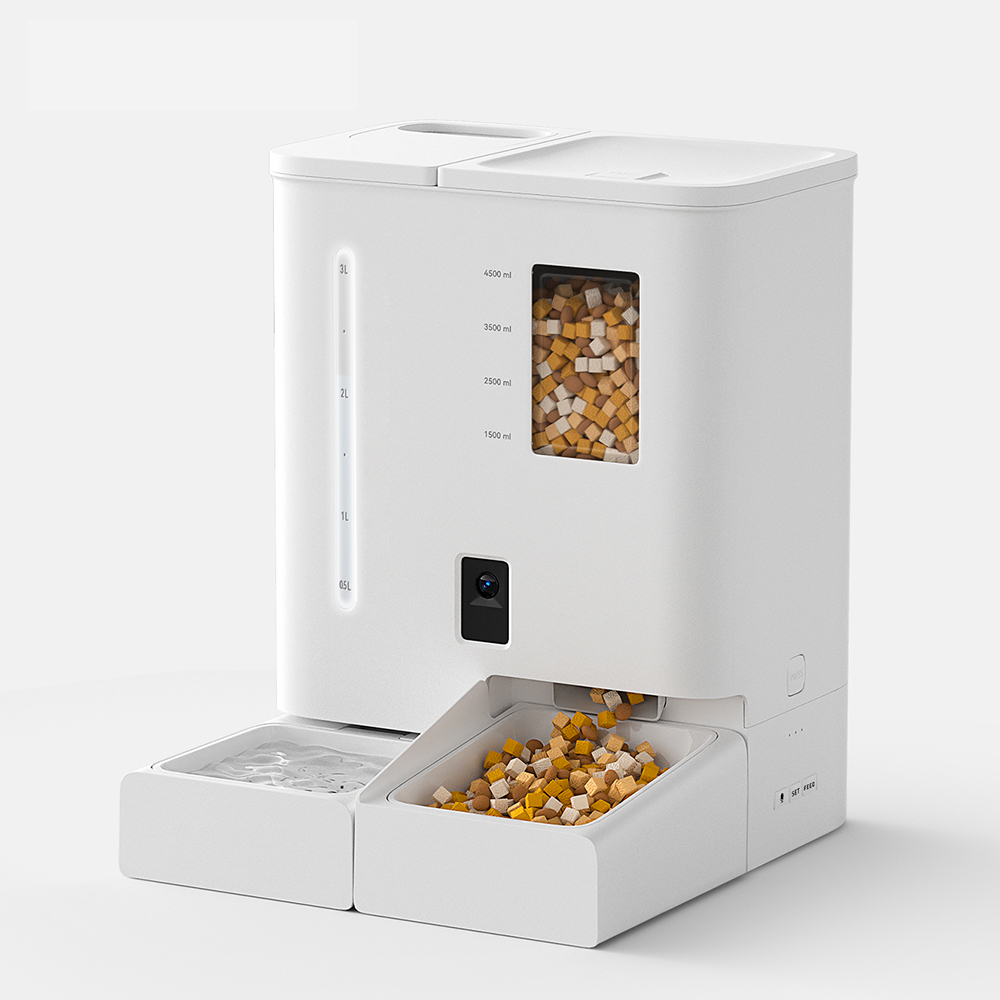
A 2-in-1 automatic pet feeder and water dispenser combines these functions and can potentially offer a stronger value proposition to consumers looking for convenience and space efficiency.
But for B2B buyers, the important question is not simply:
“Does this product have enough features?”
The better question is:
“Can this product become a reliable, sellable and sustainable product line?”
That requires looking beyond the product specification sheet.
1. Start With the Consumer Problem
Before evaluating suppliers, define the problem the product is supposed to solve.
For a 2-in-1 feeder, the core consumer proposition is relatively straightforward:
Feeding
Consumers want:
- Convenient food storage
- Scheduled meals
- Portion control
- Fewer manual feeding tasks
Hydration
They also want:
- Convenient access to water
- Larger water capacity
- Less frequent refilling
- An organized feeding area
Smart Pet Care
Increasingly, some users also want:
- App control
- Remote feeding
- Feeding records
- Camera monitoring
- Two-way interaction
The strongest products combine these needs without making the user experience unnecessarily complicated.
2. Don’t Evaluate a 2-in-1 Product by the Feature List Alone
Two products can have almost identical specifications but provide very different user experiences.
Bijvoorbeeld:
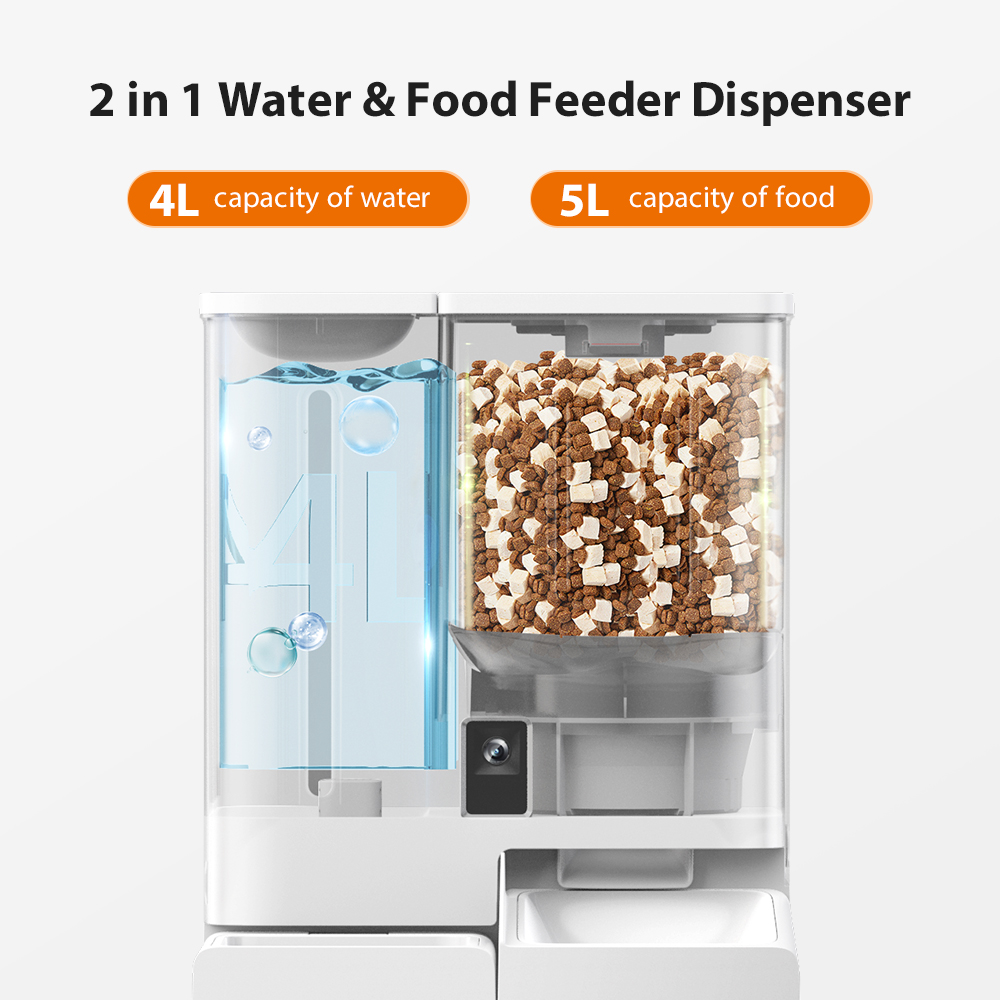
Product A: 5L hopper + 4L water tank
Product B: 5L hopper + 4L water tank + poor dispensing reliability + difficult cleaning
On paper, they look similar.
In real use, they are not.
When sourcing a 2-in-1 automatic pet feeder, B2B buyers should evaluate at least five dimensions:
- Functionality
- Reliability
- Maintenance
- User experience
- Supplier support
This approach helps prevent a common sourcing mistake:
choosing the cheapest product instead of choosing the most commercially viable product.
3. Evaluate Food Capacity Based on the Target Market
A 5L food hopper can be an attractive specification, but capacity should be evaluated based on the intended customer.
Ask:
Who will buy the product?
For single-pet households, a large hopper can reduce refill frequency.
For multi-pet households, larger capacity can become even more valuable.
For retailers, a larger capacity can also become a simple marketing message:
Less frequent refilling. More convenient daily feeding.
However, B2B buyers should verify how the capacity translates into actual food volume because different dry foods have different densities.
4. Water Capacity Should Be Evaluated Separately
The same principle applies to the water side.
A 4L water tank can reduce manual refilling, but buyers should examine the complete water system.
Important questions include:
- How does water reach the drinking area?
- Does the system replenish automatically?
- How easy is the tank to remove?
- Can water-contact components be cleaned?
- Are replacement parts available?
- How does the product prevent common water-system issues?
A “4L water tank” is only one part of the customer experience.
5. Check Feeding Performance, Not Just Feeding Settings
For an automatic feeder, feeding reliability is critical.
Ask suppliers about:
Feeding Frequency
How many meals can the product schedule per day?
The DogCatSupplies model supports up to 10 meals per day with adjustable portions, giving buyers a broader range of feeding configurations.
Portion Adjustment
Can users adjust the amount dispensed?
Anti-Clog Design
Does the dispensing system have measures to reduce clogging?
The DogCatSupplies model includes an anti-clog feeding design intended to support smoother food dispensing.
Food Compatibility
B2B buyers should also confirm what types and sizes of dry food the feeding mechanism is designed to handle.
These details can have a greater effect on customer satisfaction than a long list of smart functions.
6. Decide Which Smart Configuration Fits Your Market
Not every customer wants the same product.
This is why product configuration can be an important B2B sourcing advantage.
The DogCatSupplies product is offered in three versions:
| Series | Main Function | Target User |
|---|---|---|
| Button | Timed feeding | Basic users |
| WiFi | App control | Connected pet owners |
| Video | Camera + interaction | Smart pet-care users |
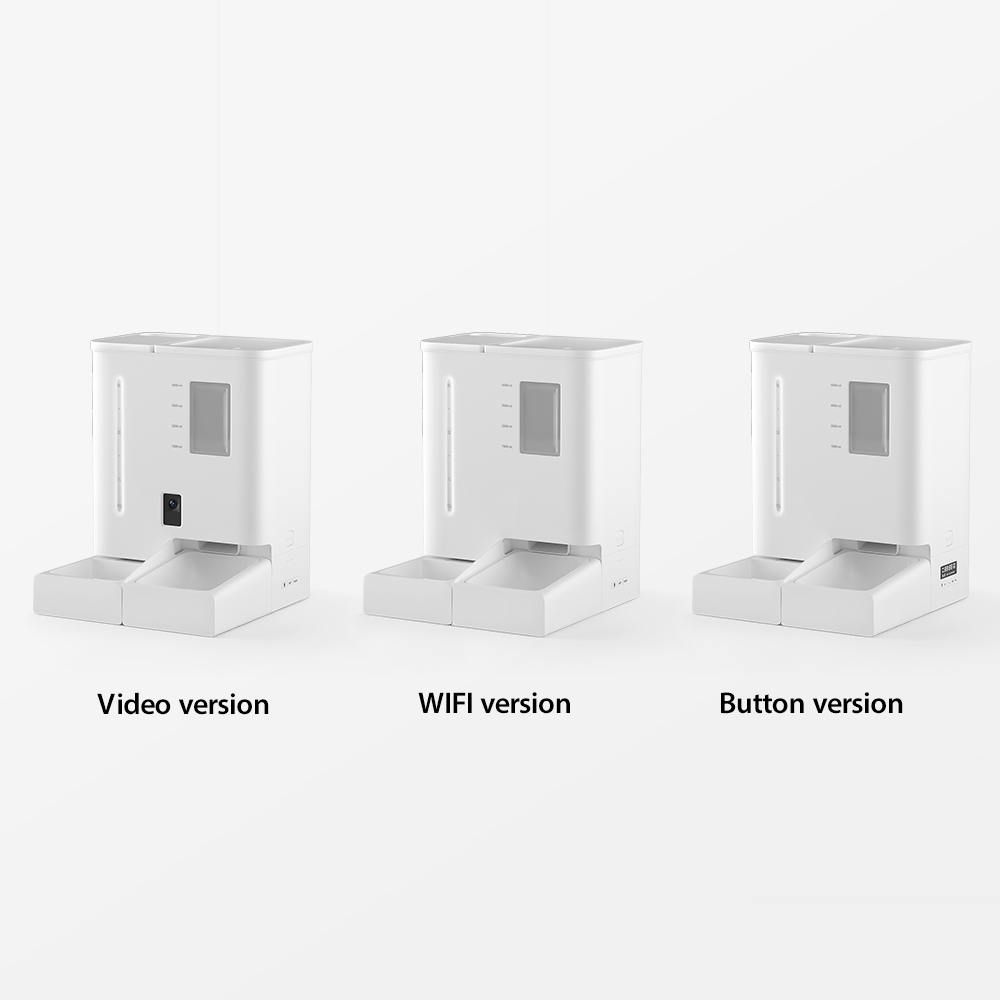
This gives B2B buyers the possibility of positioning the same basic product platform at different price points.
Bijvoorbeeld:
Entry Level
Button Series
Focus: Simple + Practical + Affordable
Mid Range
WiFi Series
Focus: Remote Control + Smart Feeding
Premium
Video Series
Focus: Monitoring + Interaction + Smart Pet Care
A product family can therefore be more commercially useful than a single fixed configuration.
7. Camera Features Need to Be Evaluated Carefully
If you are sourcing a video-enabled automatic feeder, don’t stop at:
“Does it have a camera?”
Ask what the camera actually supports.
The Video Series includes:
- Real-time viewing
- Two-way audio
- Snapshots
- Video recording
From a consumer marketing perspective, these features can transform the product from:
Automatic Feeder
into:
Remote Pet Interaction Device
That distinction can affect the product’s positioning and retail price.
8. Cleaning Is a Commercial Issue, Not Just a Consumer Issue
A product that is difficult to clean can generate customer complaints, poor reviews and higher after-sales costs.
For B2B buyers, cleaning therefore becomes a commercial consideration.
Look for:
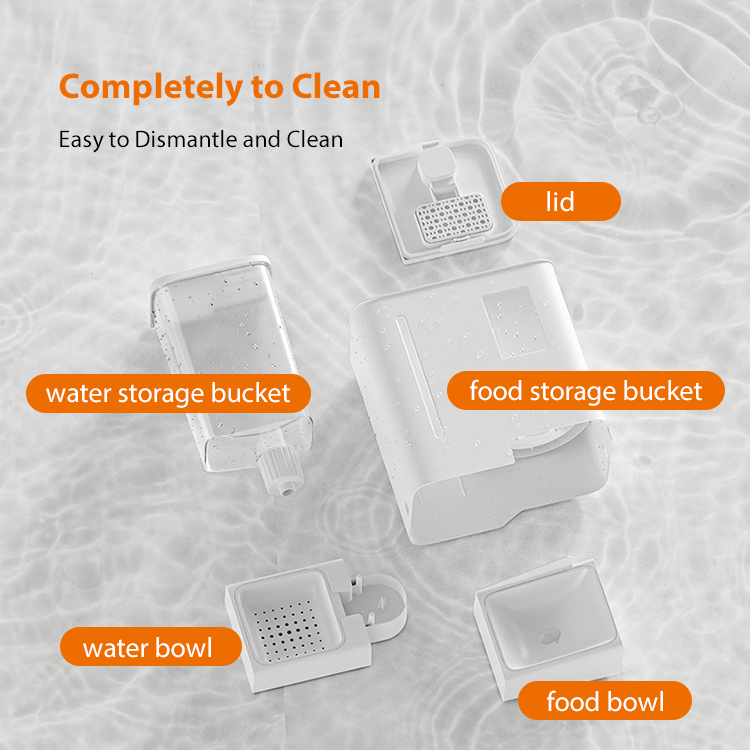
- Detachable food components
- Detachable water components
- Accessible food-contact areas
- Easy-to-clean drinking areas
- Replaceable consumables
The DogCatSupplies model uses detachable food and water components to simplify regular cleaning.
This is a small feature on a specification sheet but can have a large effect on long-term customer satisfaction.
9. Examine Power Reliability
Smart pet-care products depend on power, so B2B buyers should ask:
What happens if the main power supply is interrupted?
The DogCatSupplies system supports USB-C power and backup battery support.
For consumers, this can be positioned as an additional reliability feature.
For B2B buyers, it can become a meaningful product differentiator when comparing competing automatic feeders.
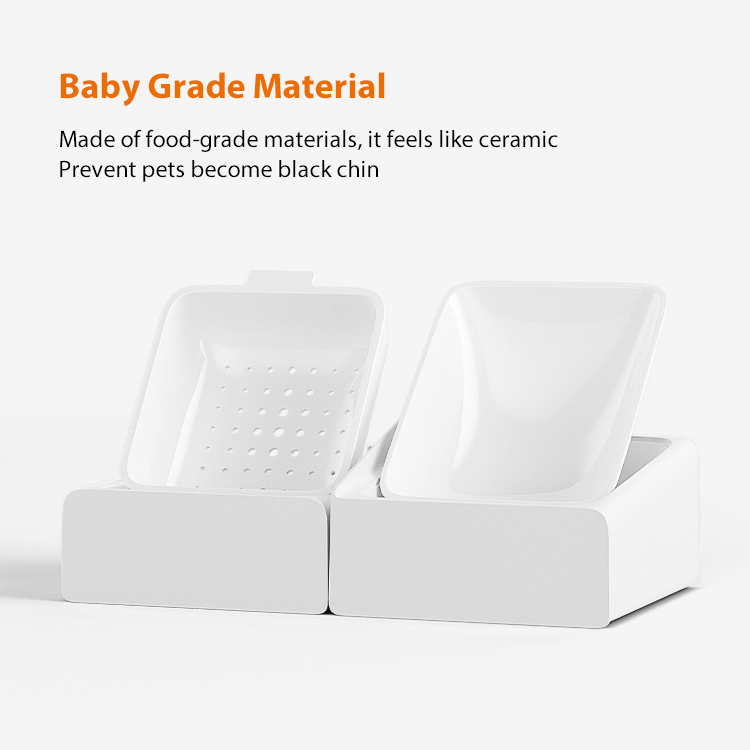
10. Don’t Forget Materials
Pet products have direct contact with food and water, so material selection should be considered carefully.
Ask suppliers:
- What materials are used?
- Which components contact food?
- Which components contact water?
- Is material documentation available?
- What testing or compliance documentation can be provided?
The DogCatSupplies product uses pet-safe, food-contact-oriented materials as part of its product design.
B2B buyers should request the appropriate documentation for their target market rather than relying only on marketing claims.
11. OEM and ODM Capability Can Matter More Than MOQ
A low MOQ can be attractive, especially for smaller brands.
But MOQ is only one part of sourcing.
A supplier that can support:
- Private labeling
- Color customization
- Structural modifications
- Functional modifications
- Packaging design
may provide more long-term value to a growing brand.
DogCatSupplies currently offers OEM/ODM customization covering branding, color, structural and functional adjustments and packaging.
This can allow a buyer to start with a standard configuration and gradually develop a more differentiated product.
12. Think About the Product as a Retail Line
One of the biggest opportunities with a 2-in-1 pet feeder is that the product does not have to be sold as a single SKU strategy.
A B2B buyer could potentially build a product range around different customer needs.
Entry Product
Button Series
Target: Price-sensitive consumers.
Smart Product
WiFi Series
Target: Technology-oriented pet owners.
Premium Product
Video Series
Target: Consumers who want remote monitoring and interaction.
This type of product architecture can give retailers more options without requiring completely different product categories.
13. Questions to Ask a 2-in-1 Pet Feeder Supplier
Before placing an order, ask the supplier for clear answers to these questions:
Product
- What is the food capacity?
- What is the water capacity?
- How many meals can be scheduled?
- Can portions be adjusted?
- Does it have anti-clog protection?
Smart Features
- Is WiFi available?
- What app is used?
- Can feeding schedules be changed remotely?
- Are feeding records available?
- Does the camera support two-way audio?
Maintenance
- Which parts are detachable?
- What parts require regular replacement?
- Are filters available?
- Are pumps replaceable?
Manufacturing
- What customization is available?
- What is the MOQ?
- Can packaging be customized?
- Can product colors be customized?
- Can functions be modified?
Commercial Support
- What warranty is offered?
- Are spare parts available?
- What documentation is available?
- What is the production lead time?
A supplier that can answer these questions clearly is generally easier to evaluate than one that only provides a basic product catalog.
14. How to Compare Suppliers
Instead of comparing suppliers only by unit price, create a simple scorecard.
| Category | Weight |
|---|---|
| Product Functionality | 20% |
| Product Reliability | 20% |
| Manufacturing Capability | 15% |
| Customization | 15% |
| Quality & Documentation | 10% |
| MOQ & Pricing | 10% |
| After-Sales Support | 10% |
This prevents price from becoming the only decision factor.
A supplier offering a slightly lower unit price may ultimately cost more if the product has high return rates or limited replacement-part support.
15. Why 2-in-1 Products Can Be Attractive for Pet Retail
The retail value of a 2-in-1 system comes from the number of consumer needs it addresses.
Instead of selling:
Food Automation
the product can be positioned around:
Feeding + Hydration + Convenience + Smart Monitoring
This creates several potential marketing angles:
- Convenience: One station manages two daily pet-care needs.
- Space Saving: Food and water functions are integrated.
- Smart Pet Care: App control and camera functions add connectivity.
- Larger Capacity: 5L food and 4L water reduce frequent refilling.
- Flexible Product Positioning: Button, WiFi and Video versions can target different customer groups.
B2B Sourcing Checklist
Before selecting a supplier, make sure you can answer:
Product
- ☐ 2-in-1 feeding and watering
- ☐ Food capacity confirmed
- ☐ Water capacity confirmed
- ☐ Feeding schedule confirmed
- ☐ Portion control confirmed
- ☐ Anti-clog design confirmed
Smart Features
- ☐ WiFi version available
- ☐ App functions confirmed
- ☐ Feeding records available
- ☐ Video version available
- ☐ Two-way audio available
Manufacturing
- ☐ OEM available
- ☐ ODM available
- ☐ Logo customization
- ☐ Color customization
- ☐ Packaging customization
- ☐ Structural/functional customization
After-Sales
- ☐ Spare parts
- ☐ Filters
- ☐ Pumps
- ☐ Warranty
- ☐ Technical support
Final Thoughts for B2B Buyers
A good 2-in-1 automatic pet feeder should not be evaluated simply by asking how many features it has.
The more important question is whether the product creates a clear consumer benefit and whether the supplier can support that product throughout its commercial life.
For buyers, the ideal combination may include:
- 5L Food Capacity
- 4L Water Capacity
- Scheduled & Portion-Controlled Feeding
- Automatic Water Management
- App Control
- Video Monitoring
- Easy-Clean Components
- Flexible OEM/ODM
The DogCatSupplies 2-in-1 platform offers these functions across different configurations, from basic timed feeding to WiFi control and video monitoring.
For retailers and distributors, the biggest opportunity is not simply selling another automatic feeder.
It is offering a product that brings several everyday pet-care needs together in one system—and building different product configurations around different customer segments.