The Complete 2026 Pet Water Fountain Guide: Hydration Solutions for Cats & Dogs
As pet parents, we all want the best for our furry companions. One often overlooked aspect of pet care is proper hydration. Just like humans, cats and dogs need adequate water intake to maintain optimal health, energy levels, and overall well-being. This comprehensive guide explores everything about pet water fountains—from understanding why pets need specialized hydration solutions to selecting the right product for your customers or your own pets, and even how to source OEM pet products for wholesale pet supplies distribution.
Why Pet Hydration Matters More Than Ever
Understanding Cat Hydration Needs
Cats are naturally low-thirst animals, a trait inherited from their desert-dwelling ancestors. In the wild, cats obtained most of their moisture from prey. This evolutionary trait means that domestic cats often don’t drink enough from traditional water bowls, leading to chronic mild dehydration that can contribute to urinary tract issues, kidney problems, and decreased energy levels.
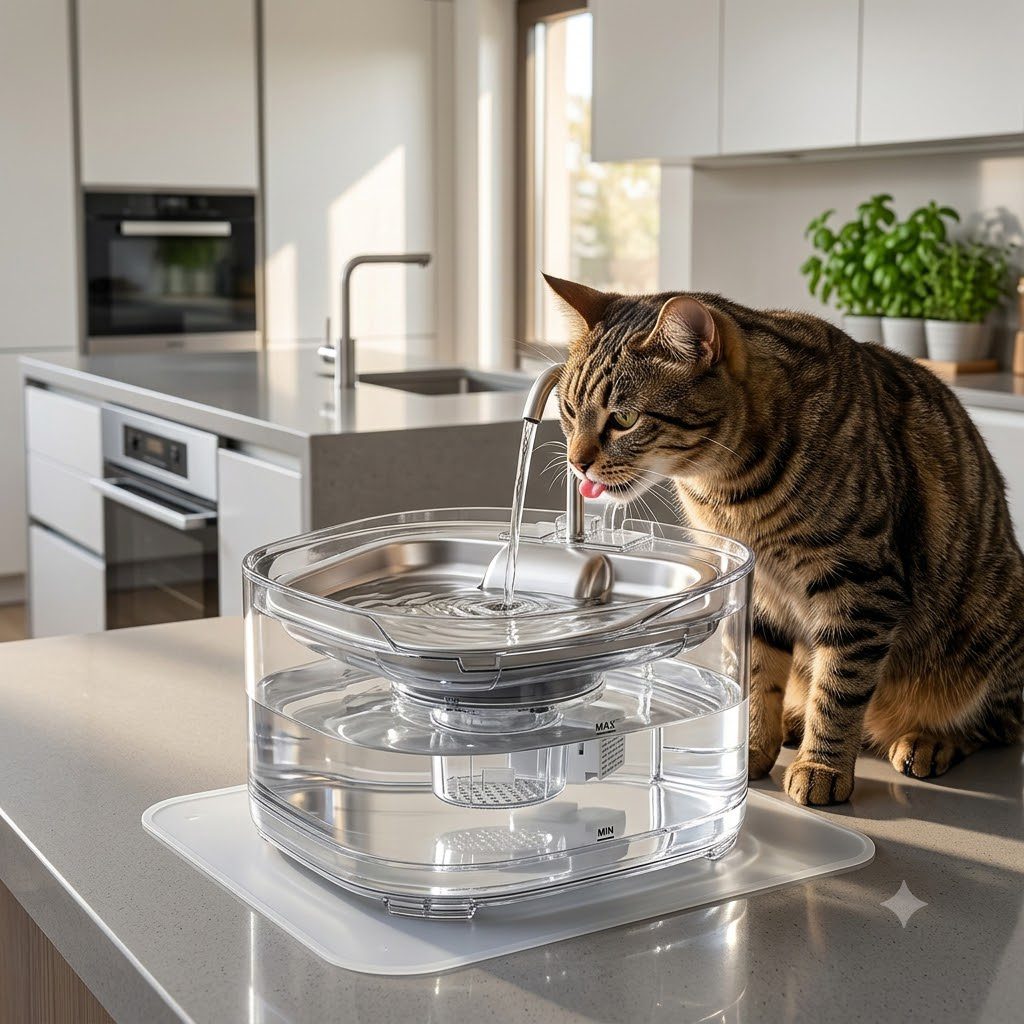
A cat water fountain addresses this challenge by providing fresh, moving water that attracts cats’ natural curiosity and encourages more frequent drinking. The sound and movement of flowing water makes it more appealing than stagnant bowl water, potentially increasing a cat’s daily water intake by up to 50% compared to conventional water dishes.
Dog Hydration: Essential Facts for Pet Parents
Dogs, while generally more willing to drink water than cats, still benefit significantly from dedicated hydration solutions. Dogs need approximately one ounce of water per pound of body weight daily, but this requirement increases with activity levels, weather conditions, and diet. Dehydration in dogs can lead to serious health issues including heat stroke, kidney dysfunction, and reduced cognitive function.
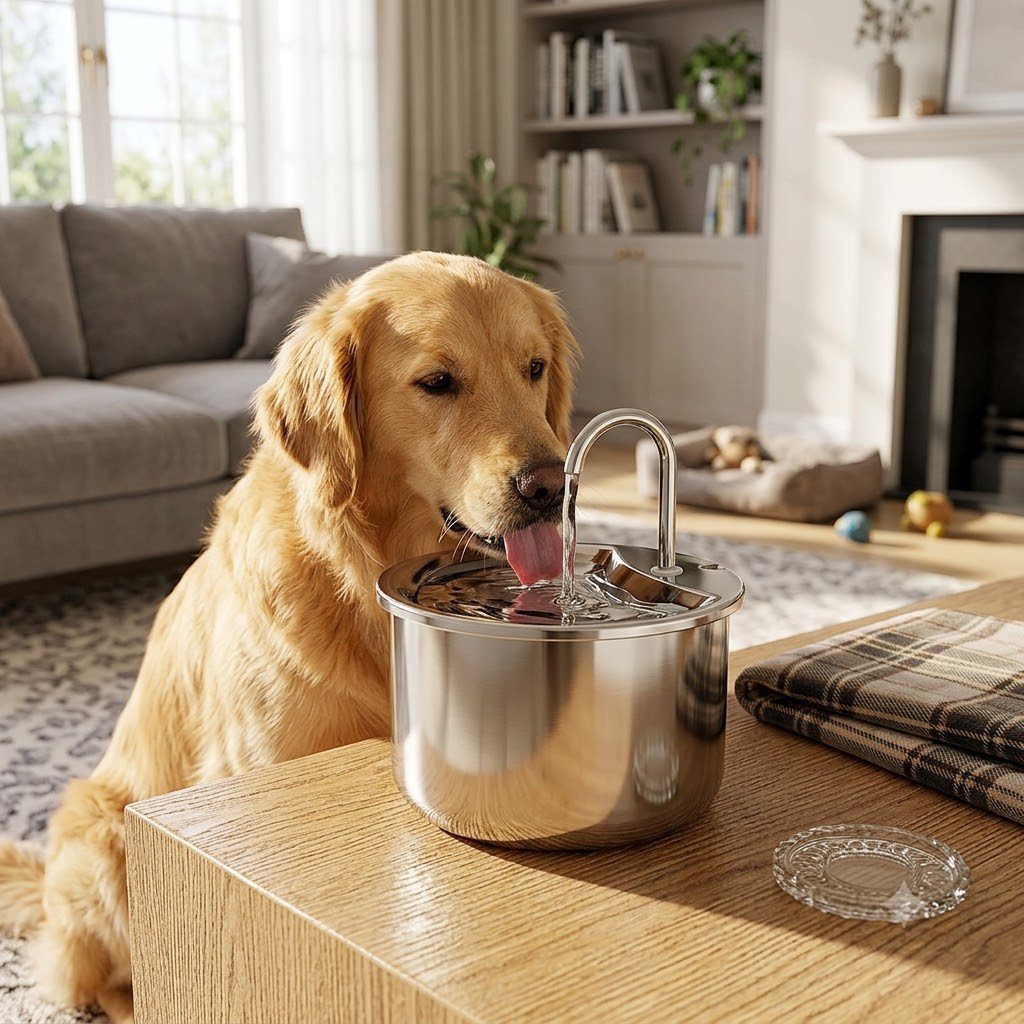
A dog hydration station with a quality water fountain ensures dogs have constant access to fresh, clean water. Many pet owners report that their dogs drink more willingly from fountains, particularly during hot summer months or after physical activity.
Pet Water Fountain vs. Traditional Water Bowls: A Comprehensive Comparison
Why Moving Water Works Better
The fundamental difference between a pet water fountain and a standard bowl lies in water movement and freshness. Here’s what the research and expert observations tell us:
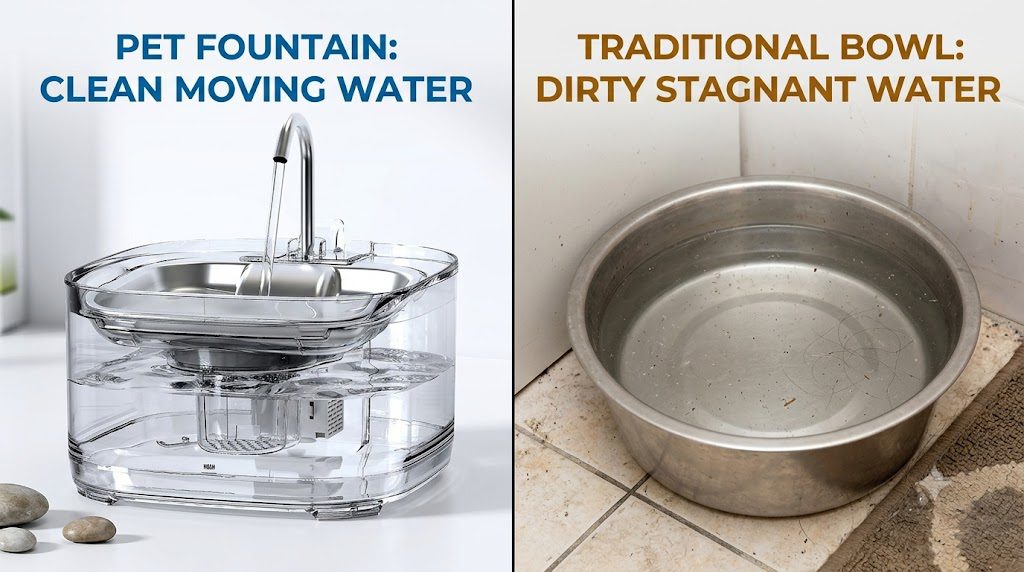
Advantages of Water Fountains:
Continuous Filtration: Most quality fountains include pet water filter systems that remove impurities, chlorine, and odor, making water more appealing to pets
1.Oxygenation: Moving water holds more oxygen, which keeps it fresher for longer periods
2.Temperature Regulation: Some advanced fountains maintain optimal water temperature
3.Encourages Natural Instincts: Pets are naturally attracted to running water sources in the wild
4.Reduces Bacterial Growth: Continuous movement prevents stagnant water where bacteria can flourish
Considerations for Traditional Bowls:
1.Water quickly becomes stagnant and collects dust, hair, and debris
2.No filtration means impurities accumulate
3.Some pets, especially cats, may not drink enough from bowls
4.Requires more frequent cleaning and water changes
Making the Right Choice for Your Pet
When advising customers or selecting products, consider these factors:
1. Pet Type: Cats typically benefit more from fountains due to their low-thirst nature
2. Pet Age: Senior pets and kittens may have specific hydration needs
3. Multi-Pet Households: Fountains with larger capacity serve multiple pets better
4. Space Considerations: Countertop vs. floor-standing options
5. Maintenance Willingness: Fountains require regular cleaning and filter replacement
Understanding Pet Water Fountain Technology
How Pet Water Fountains Work
Modern pet water fountains operate on a simple yet effective principle: continuously circulating water through a filtration system to maintain freshness and appeal. Here’s what happens inside:
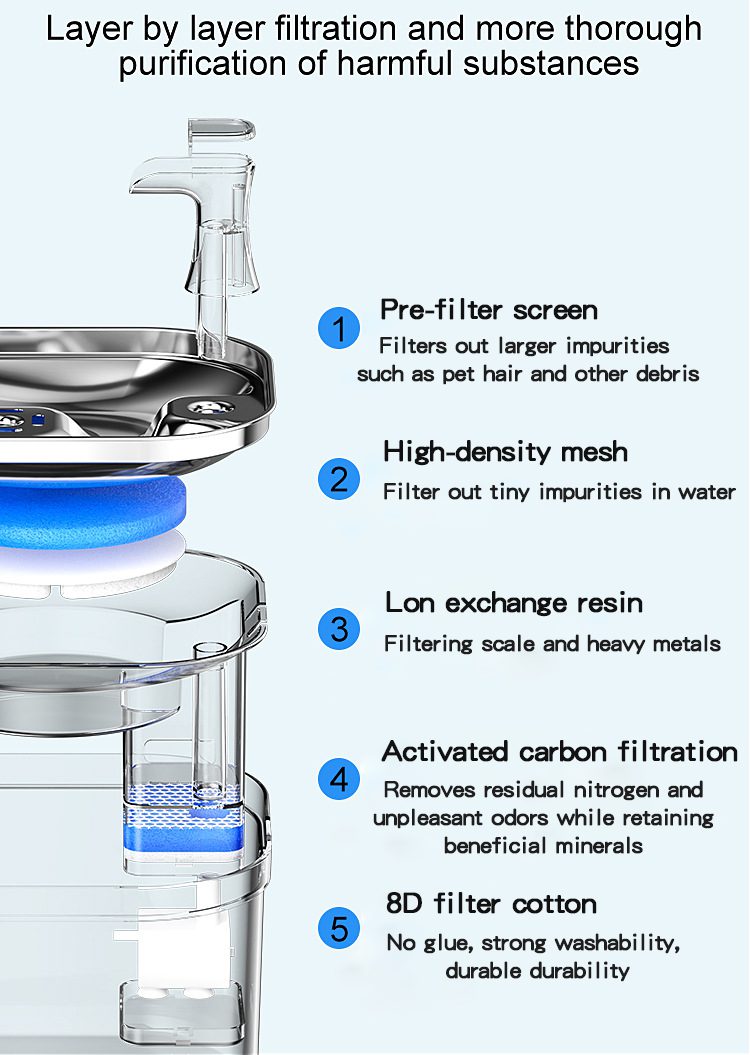
1. Water Reservoir: Stores water supply (typically 1-5 liters depending on model)
2. Pump System: Circulates water, creating the characteristic bubbling or flowing effect
3. Filtration Stage: Pet water filter components (usually activated carbon and foam) remove particles, odors, and impurities
4. Water Distribution: Water flows to multiple drinking points or a single spout
5. Overflow Protection: Safety mechanisms prevent overfilling and electrical hazards
Types of Filtration Systems
Basic Filtration (Entry-Level Fountains):
Foam pre-filter catches hair and large particles
Activated carbon removes chlorine and odors
Ideal for single-pet households with moderate use
Advanced Filtration (Premium Fountains):
Multi-stage filtration including ceramic or bio-sponge
UV sterilization options for enhanced purification
Indicators for filter replacement schedules
Suitable for multi-pet homes or pets with sensitive systems
Smart Filtration (Tech-Enabled Fountains):
App connectivity for monitoring water consumption
Filter life tracking
Water quality sensors
Usage analytics for tracking pet health patterns
Choosing the Right Pet Water Fountain: A Buyer’s Guide
For Individual Pet Owners
When selecting a cat water fountain or dog hydration station, evaluate:
Capacity: Ensure adequate water supply for your pet’s needs
Noise Level: Some pets are sensitive to pump sounds
Ease of Cleaning: Look for dishwasher-safe components
Material Safety: BPA-free plastics, stainless steel, or ceramic options
Price Point: Balance features with budget
For Retailers and B2B Buyers
If you’re sourcing products for retail or distribution:
Bulk Pricing: Evaluate wholesale pet supplies terms
Quality Certifications: ISO, CE, and safety standards compliance
OEM/ODM Capabilities: For custom branding options
Supply Chain Reliability: Lead times and minimum order quantities
Warranty Support: Manufacturer backing and parts availability
Recommended Categories by Use Case
| Use Case | Recommended Type | Key Features |
| Single Cat | Small capacity, quiet operation | 1-2L, low noise, single spout |
| Single Dog | Medium capacity, durable | 2-3L, sturdy base, easy clean |
| Multi-Pet Household | Large capacity, multiple spouts | 4-5L, multiple access points |
| Senior Pets | Shallow water depth, easy access | Low height, gentle flow |
| Tech-Smart Home | WiFi-enabled, app integration | Smart monitoring, alerts |
The Smart Pet Feeder Connection: Integrating Hydration with Feeding
Many modern pet owners look for connected solutions, which is where smart pet feeder technology intersects with hydration. Advanced systems now offer:
Scheduled Water Delivery: Timed hydration for pets with specific needs
Consumption Tracking: Monitoring water intake alongside food consumption
Integration with Pet Health Apps: Centralized health data for pet parents
Remote Monitoring: Control and check hydration status from anywhere
For businesses, this represents an opportunity to offer automatic pet feeder solutions that complement water fountains, creating comprehensive smart pet care stations for discerning customers.
2026 Pet Water Fountain Market Trends
Industry Growth Projections
The pet water fountain market continues to show robust growth, driven by:
1. Increased Pet Ownership: More households adopting pets, particularly in urban areas
2. Humanization Trend: Pet parents treating pets as family members with premium products
3. Health Awareness: Greater understanding of pet hydration’s impact on longevity
4. Smart Home Integration: Growing demand for connected pet care devices
5. Sustainability Focus: Interest in eco-friendly, durable products
Emerging Product Innovations
2026 Trends to Watch:
AI-Powered Hydration Monitoring: Machine learning to detect early signs of dehydration
Sustainable Materials: Bamboo, recycled plastics, and biodegradable components
Modular Designs: Customizable configurations for specific needs
UV-C Sterilization: Advanced purification without chemicals
Whisker-Friendly Designs: Wider drinking areas to accommodate cat whiskers
OEM & Wholesale Opportunities: For B2B Buyers
Why Pet Water Fountains Are a Strong Wholesale Category
For businesses looking to expand their wholesale pet supplies inventory, pet water fountains offer compelling advantages:
Market Demand:
Consistent consumer interest in pet health products
Gift-giving occasions (holidays, pet birthdays)
Repeat purchase potential (filters, replacement parts)
Cross-selling opportunities with other pet products
Competitive Margins:
Quality products command premium pricing
Filter replacements create recurring revenue
Bundle opportunities with feeders, bowls, and accessories
OEM Manufacturing Considerations
For businesses interested in OEM pet products, water fountains present unique opportunities:
Customization Options:
Brand logo placement
Custom color schemes
Proprietary filter formulations
Exclusive size configurations
Packaging design
Partner Selection Criteria:
Production capacity and scalability
Quality control processes (ISO certifications)
Sample development timelines
Minimum order requirements
Export experience and logistics support
B2B Value Proposition
When positioning private label pet products for wholesale distribution, emphasize:
Quality Assurance: Testing protocols and certifications
Supply Chain Transparency: Clear sourcing and manufacturing visibility
Market Support: Marketing materials, product training, and support
Competitive Pricing: Tiered volume discounts
Responsive Service: Dedicated account management
Pet Water Fountain Maintenance: Ensuring Longevity
Regular Care Requirements
To maximize the lifespan of any pet water fountain:
Daily Tasks:
Check water level and top up as needed
Wipe the drinking area to remove saliva buildup
Quick visual inspection of cord and pump
Weekly Tasks:
Empty and rinse the reservoir
Clean all surfaces with pet-safe disinfectant
Check filter condition
Monthly Tasks:
Deep clean all components
Replace filters according to manufacturer guidelines
Inspect pump for wear or blockages
Troubleshooting Common Issues
| Problem | Possible Cause | Solution |
| Pump noise | Air in pump, low water level | Prime pump, check water level |
| Reduced water flow | Clogged filter, dirty pump | Clean or replace filter, clean pump |
| Water discoloration | Old filter, algae growth | Replace filter, deep clean, use opaque cover |
| Pet not drinking | Unfamiliarity, location, noise | Place in quiet area, introduce gradually |
Frequently Asked Questions (FAQ)
1. How often should I change the filter in my pet water fountain?
Most manufacturers recommend changing filters every 2-4 weeks, depending on usage and pet count. However, you should inspect the filter monthly—if it appears discolored or has an odor, replace it sooner. Some smart fountains provide filter life tracking through app notifications. Regular filter maintenance ensures optimal water quality and extends the fountain’s lifespan.
2. Are pet water fountains safe for kittens and senior pets?
Yes, when appropriately sized. Choose models with shallow water depth for senior pets or those with mobility issues. For kittens, select fountains with gentle flow rates to prevent splashing or fear. Always supervise initial use and ensure the fountain’s base is stable to prevent tipping.
3. Can I use my pet water fountain outdoors?
While some fountains are designed for outdoor use, most standard models are intended for indoor use only. If outdoor placement is needed, look for fountains specifically rated for exterior use with weather-resistant components. Bring the fountain indoors during freezing temperatures to prevent pump damage.
4. How do pet water fountains help with urinary health in cats?
Chronic mild dehydration is a leading contributor to urinary tract issues in cats. By encouraging more frequent water consumption through appealing flowing water, fountains help cats maintain proper hydration, diluting urine and promoting more frequent urination, which flushes the urinary tract. Many veterinarians recommend water fountains as part of preventive urinary health care.
5. What should I look for when buying a pet water fountain for wholesale?
For B2B buyers sourcing wholesale pet supplies, prioritize: quality certifications (CE, RoHS, FDA-compliant materials), consistent manufacturing quality, reliable supply chain, competitive pricing with volume discounts, filter replacement availability, and OEM/brand customization options. Request samples before bulk orders and verify manufacturer quality control processes.
6. How do I choose between different fountain sizes for my customers?
Guide customers based on their situation: Single pet in small apartment = 1-2 liter capacity; Multiple pets or larger home = 3-5 liter capacity; Senior pets = low-profile design with easy access. For retailers, stock a variety of sizes to meet diverse customer needs and consider bundle pricing for customers purchasing multiple units.
Conclusion
Pet water fountains represent more than just a convenient way to provide water—they’re an investment in our pets’ health and longevity. Whether you’re a pet parent seeking the best hydration solution for your furry friend, or a business looking to offer quality wholesale pet supplies or OEM pet products, understanding the nuances of this category is essential.
The market continues to evolve with smart technology integration, sustainability focus, and increasingly sophisticated filtration systems. For B2B buyers, the opportunities in private label pet products and factory supply chain partnerships are substantial, particularly as consumer awareness of pet hydration’s importance grows.
Ready to source premium pet water fountains for your business?
- Partner with DogCatSupplies for:
- OEM/ODM Customization – Create your own brand pet products
- Wholesale Pricing – Competitive bulk order rates
- Private Label Solutions – Custom packaging and branding
- Reliable Supply Chain – Factory-direct manufacturing
Why Partner with Our Factory?
- 10+ years manufacturing experience
- ISO 9001 certified production
- Low MOQ for private label orders
- Global shipping available
- Dedicated B2B account manager