For pet brands, Amazon sellers, wholesalers, and importers, dog harness returns can quickly turn a profitable product line into a costly problem.
A harness may look attractive in product photos and perform well during initial sampling, yet problems can emerge after mass production. Customers may complain about inconsistent sizing, uncomfortable materials, weak buckles, loose stitching, or differences between the approved sample and the delivered goods.
For B2B buyers, these issues affect more than individual orders. They can lead to additional shipping costs, negative product reviews, inventory losses, and increased after-sales workload.
The challenge is that many quality problems can be difficult to identify from product photos or a single sample. Buyers need a clear process for evaluating product specifications, checking samples, confirming customization details, and inspecting bulk orders.
This guide provides a practical dog harness quality checklist for wholesale and OEM purchasing. Use it when evaluating suppliers, comparing samples, preparing private-label products, and setting quality requirements before mass production.

1. What Causes Dog Harness Returns After Wholesale Orders?
Before selecting a supplier, identify the product issues most likely to create customer complaints.
Understanding these risks helps you ask better questions during sourcing and establish clear requirements before placing a bulk order.
1.1 Incorrect Sizing and Inconsistent Measurements
Sizing is an important consideration when sourcing dog harnesses.
A harness may fit during sample testing but become problematic if measurements vary between production batches. Unclear size charts can also cause customers to select the wrong size, increasing exchanges and returns.
For private-label brands, these problems can be especially costly because the size information, product packaging, and customer reviews are associated with your brand.
What buyers should check:
- Chest girth and neck opening measurements for every size.
- Minimum and maximum adjustment ranges.
- Measurement tolerances agreed upon with the supplier.
- Consistency between approved samples and bulk production.
- Whether the size chart clearly explains how customers should measure their dogs.
Do not rely on general labels such as S, M, L, and XL alone. Confirm the actual measurements and intended fit for each size.
1.2 Uncomfortable or Unsuitable Materials
The wrong material can affect comfort, durability, and customer satisfaction.
For example, rough fabric edges may cause friction, while poorly constructed mesh can tear during regular use. Materials that become stiff after washing may also affect the overall wearing experience.
The best material depends on the intended product positioning, target customer group, dog size range, and expected usage.
What buyers should check:
- Fabric softness and edge finishing.
- Resistance to tearing and fraying.
- Breathability and padding construction.
- Material performance after washing.
- Whether the material matches the approved product specifications.
When comparing suppliers, evaluate the complete construction rather than choosing a harness based only on its material name.
1.3 Weak Buckles and Hardware
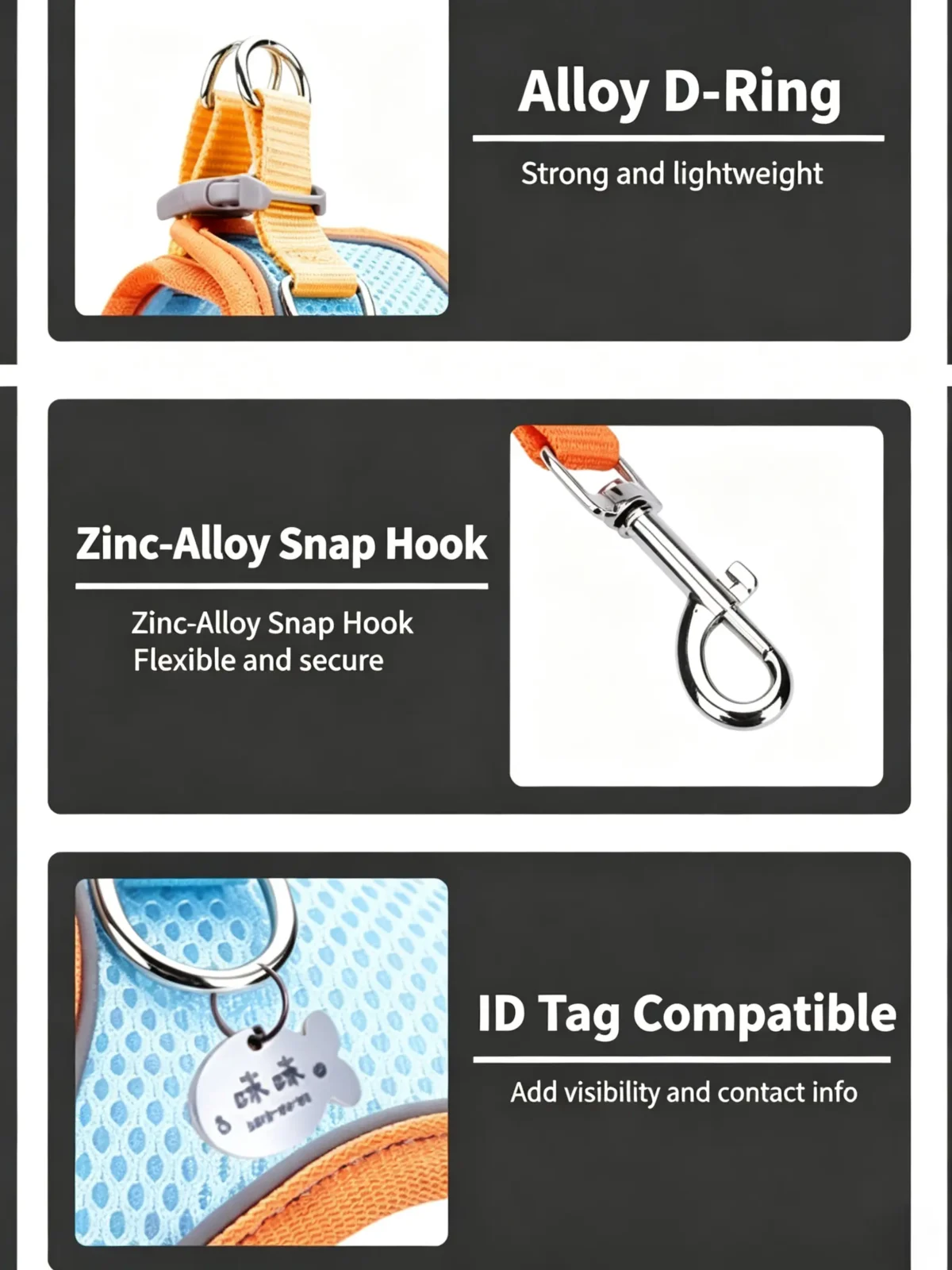
Buckles, D-rings, adjustment sliders, and leash attachment points are essential parts of a dog harness.
If these components fail, customers may lose confidence in the entire product. Hardware problems can also create safety concerns, making them especially important to assess before approving a supplier.
What buyers should check:
- Buckle locking and release functions.
- Compatibility between hardware and strap dimensions.
- Stability of D-rings and attachment points.
- Signs of cracking, deformation, or poor finishing.
- Appropriate durability testing for the intended product use.
Ask suppliers to explain their hardware specifications and available test procedures. If your product is designed for large or strong dogs, make sure the hardware and construction requirements reflect that intended use.
1.4 Weak Stitching and Poor Edge Finishing
A harness can use good fabric and hardware but still have durability problems if its stitching is inadequate.
Areas around D-rings, buckles, shoulder connections, and strap joints may experience repeated tension during use.
Loose threads, uneven seams, and insufficient reinforcement can affect product quality and increase the risk of complaints.
What buyers should check:
- Reinforcement at high-stress connection points.
- Consistency of stitching across the product.
- Loose threads and skipped stitches.
- Secure attachment of straps and hardware.
- Cleanly finished fabric edges.
These details should be included in the sample approval checklist rather than left to visual judgment during final inspection.
1.5 Logo, Color, and Reflective Material Problems
For private-label pet brands, appearance and branding consistency are also important.
A logo that peels after washing, a color that differs from the approved sample, or packaging with incorrect information can make a product unsuitable for retail sale.
Reflective details require particular attention when they are part of the product’s advertised features.
What buyers should check:
- Logo placement, size, and color.
- Print or embroidery quality.
- Color consistency against the approved reference.
- Reflective material specifications and attachment.
- Hang tags, size labels, and retail packaging.
- Resistance of decorative elements to expected use and care.
Confirm these details in writing before mass production.
2. Dog Harness Quality Checklist for Wholesale Buyers
A reliable sourcing process should turn general expectations into measurable product requirements.
Use the following checklist when comparing suppliers or preparing a purchase order.
| Inspection Area | What to Confirm | Why It Matters |
|---|---|---|
| Product dimensions | Measurements for every size and agreed tolerances | Reduces sizing inconsistencies |
| Fabric | Material specifications, softness, and durability | Helps prevent premature wear |
| Stitching | Reinforcement and seam consistency | Improves structural reliability |
| Buckles | Locking function and durability requirements | Reduces hardware-related complaints |
| D-rings | Material, construction, and attachment quality | Supports reliable leash connections |
| Adjustment straps | Smooth adjustment and secure fastening | Improves fit and usability |
| Logo customization | Artwork, placement, color, and application method | Maintains brand consistency |
| Reflective details | Material specifications and attachment method | Helps verify advertised features |
| Labels and packaging | Size information, branding, and packaging details | Reduces labeling mistakes |
| Bulk inspection | Inspection criteria and defect-handling process | Helps control production consistency |
Not every product requires the same testing procedures. Define inspection requirements according to the harness design, target market, and intended use.
For larger orders, it is particularly important to document the agreed specifications and establish how nonconforming products will be handled.
3. How to Choose the Right Materials for Your Dog Harness Line
Material selection affects product positioning, perceived quality, and manufacturing cost.
Rather than asking which material is universally best, consider how each option fits your target market.
Breathable Mesh
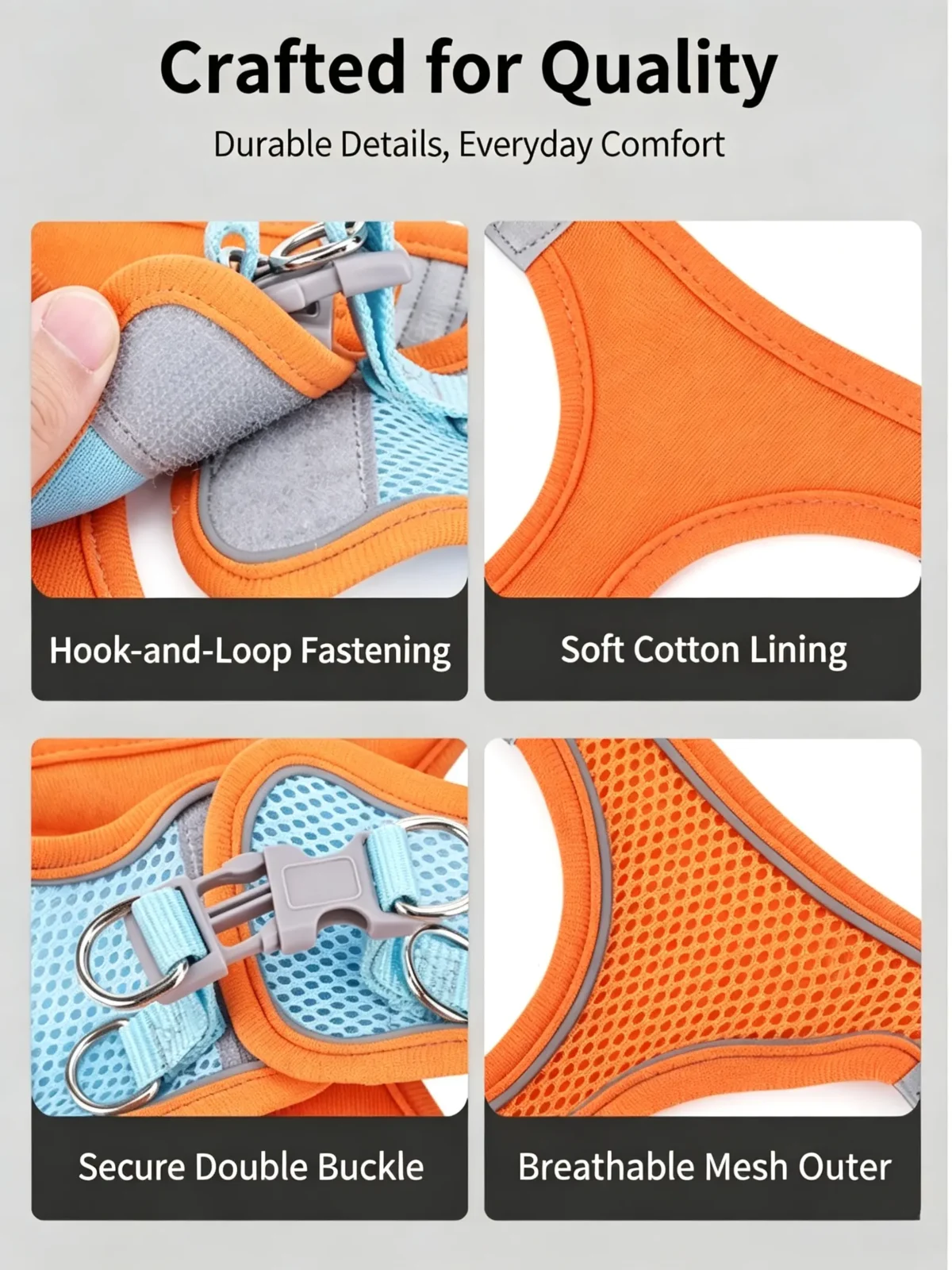
Mesh harnesses are commonly considered for everyday walking products where comfort and ventilation are important.
When evaluating mesh, check its construction, tear resistance, edge finishing, and performance after washing.
Avoid judging quality by appearance alone. Two harnesses that look similar may have different fabric densities, backing materials, and construction quality.
Nylon Webbing
Nylon webbing is used in many walking products because it can provide a practical balance of strength, flexibility, and versatility.
For wholesale purchasing, confirm the actual webbing specifications, width, thickness, and finishing.
The suitability of the webbing also depends on the harness design and the hardware used at its connection points.
Padded Construction
Padding can improve the feel of a harness against the dog’s body, but the quality of the padding and outer fabric both matter.
Check whether the padding retains its shape, whether the edges feel comfortable, and whether the construction allows for appropriate drying and care.
If your target market prioritizes comfort or premium positioning, evaluate these details during sample testing.
Reflective Details
Reflective elements can be a useful feature for walking products marketed for low-light conditions.
However, the word “reflective” alone does not establish the performance or durability of the material.
Ask for the relevant material specifications and check how the reflective element is attached. Where durability claims are important to your product positioning, request appropriate supporting test information.
How to Evaluate Material Quality Before Ordering
Before approving a material, consider the following process:
- Compare the supplier’s stated specifications with the physical sample.
- Check the fabric for rough edges, loose fibers, and visible defects.
- Follow appropriate care instructions to evaluate performance after washing.
- Examine stitching and attachment points after repeated handling.
- Confirm that the approved material will be used in mass production.
- Record the results so that your team can compare suppliers using the same criteria.
4. Dog Harness Sizing: What Buyers Must Confirm Before Bulk Orders
Sizing should be confirmed before the product is approved for production, not after customers begin reporting fit problems.
A complete size chart helps customers select the appropriate product, while consistent production measurements help protect your inventory investment.
Step 1: Confirm the Measurement Points Ask the supplier to provide clear measurement diagrams and specifications. Depending on the design, these may include:
- Chest girth.
- Neck opening.
- Strap width.
- Adjustable strap range.
- Overall dimensions where relevant.
Make sure both parties use the same measurement method.
Step 2: Establish Size Tolerances Different harness designs may require different tolerances.
Confirm the acceptable measurement range for each important dimension and document it in the product specification.
Do not assume that a supplier will automatically use the same standards as your previous manufacturer.
Step 3: Evaluate Fit Across Relevant Body Shapes A harness that works for one dog shape may not fit another equally well.
When practical, evaluate samples using representative body shapes within the product’s intended size range.
Check whether the harness can be adjusted securely and whether its structure remains appropriate when fitted according to the product instructions.
Step 4: Prepare Accurate Product Information Your product listing should explain how customers should measure chest girth and select a size.
Use the actual measurements for your product rather than relying on breed names alone.
Clear size information can help customers make better purchasing decisions and may reduce avoidable size-related returns.
Step 5: Verify Size Consistency in Bulk Production Once the pre-production sample is approved, use the confirmed measurements as the reference for bulk inspection.
Check products from different cartons or production batches according to the agreed inspection plan.
This helps identify inconsistencies before the goods reach your warehouse or customers.
5. How to Check Buckles, Stitching, and Structural Quality
Visual inspection is important, but it should not replace functional testing.
When sourcing dog harnesses, buyers should establish suitable acceptance criteria for each critical component.
Buckles and Adjustment Components
Check whether buckles open and close correctly and whether adjustment components operate as intended.
Look for cracks, sharp edges, inconsistent molding, or components that do not fit securely.
For products intended for demanding use, discuss appropriate durability and load testing with the supplier.
D-Rings and Leash Attachment Points
Inspect the attachment point, surrounding stitching, and connection structure as a complete assembly.
A strong metal component does not guarantee a reliable harness if the surrounding fabric or stitching is inadequate.
Where load testing is required, confirm the test method and acceptance criteria before production.
Reinforced Stitching
Pay particular attention to the areas connecting straps, buckles, and D-rings.
Check for consistent stitch patterns, secure thread ends, and signs of skipped stitches or loose seams.
For private-label orders, include these requirements in the approved product specification.
Edge Finishing
Poorly finished edges may fray or feel rough during use.
Inspect exposed fabric edges and check whether the finishing method is appropriate for the selected material and product design.
Document the Results
Create a simple inspection record covering dimensions, materials, hardware, stitching, appearance, and functionality.
This gives your team a consistent way to compare samples and assess bulk orders.
It also makes communication with the supplier more specific when corrections are required.
6. OEM Dog Harness Customization: Avoid Costly Mistakes
Private-label customization gives pet brands more control over product appearance and positioning. However, customization details must be confirmed before production begins.
Small discrepancies in logos, colors, labels, or packaging can create significant problems when an entire order is affected.
Confirm the Logo Application Method
Common options may include printing, heat transfer, embroidery, or woven labels.
The appropriate method depends on the material, artwork, appearance requirements, and expected use.
Ask the supplier to show the actual customized sample rather than approving the logo from a digital mockup alone.
Approve Colors and Materials
Provide clear color references and confirm the selected materials.
Where color consistency is important, agree on an appropriate reference sample and approval process.
Do not rely solely on verbal descriptions such as “dark blue” or “light gray.”
Check Labels and Packaging
Confirm all relevant information before mass production, including:
- Brand name and logo.
- Size labels.
- Product descriptions.
- Packaging artwork.
- Hang tags and other required labeling.
Review the final files carefully before approving production.
Establish a Sample Approval Process
A pre-production sample should represent the agreed product specifications as closely as practical.
Confirm the material, dimensions, hardware, color, logo, and packaging before authorizing mass production.
If any specifications change after approval, document the changes and confirm whether a revised sample is required.
Discuss MOQ and Trial Orders
Not every buyer needs to begin with a large order.
If your business is testing a new product category, ask whether the supplier supports a small trial order, what customization options are available, and how pricing changes with order quantity.
Clarify the minimum order quantity for the selected design and customization requirements rather than assuming all products share the same MOQ.
7. Sample Approval and Bulk Inspection: A Practical Workflow
A structured inspection process helps reduce the risk of discovering preventable problems after shipment.
The following workflow can be adapted to your product requirements and purchasing volume.
Stage 1: Evaluate the Development Sample Check the basic design, fit, materials, hardware, and overall workmanship.
Record any required changes and make sure the supplier understands which issues must be corrected before approval.
Stage 2: Approve the Pre-Production Sample The pre-production sample should reflect the agreed materials, hardware, construction, dimensions, and customization details.
Use this sample as the documented reference for production.
If important components change, review whether the revised product needs another round of approval.
Stage 3: Monitor Production Quality Agree on how product quality will be monitored during manufacturing.
Depending on the order, this may include checks on dimensions, stitching, materials, hardware, and customization.
For larger orders, consider an inspection plan that covers products from different cartons or production batches.
Stage 4: Inspect Before Shipment Before shipment, check the goods against the agreed specifications and acceptance criteria.
Relevant checks may include:
- Size and dimension consistency.
- Stitching and attachment quality.
- Buckle and adjustment functions.
- Material and color consistency.
- Logo and packaging accuracy.
- Visible defects and product cleanliness.
For more demanding orders, discuss whether specialized testing or an independent inspection is appropriate.
Stage 5: Keep Records for Future Orders Maintain the approved sample details, inspection results, and any corrective actions.
These records can help your team identify recurring problems and communicate requirements more efficiently when placing repeat orders.
Why Small Trial Orders Can Be Useful
A small trial order may help buyers evaluate product quality, supplier communication, customization accuracy, and order execution before committing to larger volumes.
However, a successful trial order does not automatically guarantee that every future batch will be identical.
For repeat purchases, continue using documented specifications and appropriate inspection procedures.
8. How to Evaluate a Dog Harness Supplier Before Placing an Order
Product quality is only one part of successful wholesale sourcing. Buyers should also consider whether the supplier can support their business requirements.
Use these questions when evaluating potential suppliers.
- Can the supplier provide clear product specifications? Look for detailed measurements, material information, hardware specifications, and customization options.
- Can the supplier support your intended customization? Confirm whether your required colors, logos, labels, packaging, and structural modifications are feasible.
- Is the sample approval process clear? A supplier should be able to explain how sample changes are handled and how the approved specifications are transferred to production.
- Can the supplier support your order quantity? Confirm the MOQ, lead time, sampling arrangements, and production schedule for your specific order.
- How are quality issues handled? Ask about inspection procedures, defect reporting, corrective actions, and the process for resolving products that do not meet the agreed requirements.
- Can the supplier support repeat orders? For established pet brands and wholesalers, consistency across repeat orders can be just as important as the first shipment.
Clarify how product specifications and approved samples will be retained for future production.
A supplier that communicates clearly about these matters can make the purchasing process easier to manage.
9. OEM Dog Harness and Leash Sets for Wholesale Buyers
For buyers developing a coordinated pet walking product line, a dog harness and leash set may offer a practical starting point.
Before selecting a design, consider the product’s intended customer group, material requirements, size range, hardware configuration, and customization needs.
If you are evaluating an OEM dog harness and leash set, confirm the following details with your supplier:
- Available designs and size options.
- Fabric and hardware specifications.
- Logo and color customization.
- Packaging and labeling options.
- Sample availability and approval requirements.
- MOQ and pricing for your intended order quantity.
- Production lead time and quality inspection arrangements.
These details should be confirmed for the specific product you plan to purchase.
For new product launches, a sample review or suitable trial order may help you assess whether the design and supplier meet your requirements before expanding the order volume.
Looking for an OEM dog harness and leash set for your pet brand or wholesale business? Explore our product options and discuss your target specifications, customization requirements, and order quantity with our team.
10. Frequently Asked Questions About Wholesale Dog Harnesses
Q1: Do mesh dog harnesses have more quality problems than nylon harnesses?
Not necessarily. Performance depends on the material specifications, construction, stitching, and intended use. Compare the actual samples and verify the relevant quality requirements instead of judging a product by its material name alone.
Q2: Can an OEM supplier customize dog harness sizes for my brand?
Customization may be possible depending on the product design and manufacturing requirements. Discuss the target measurements, adjustment range, size grading, and applicable MOQ with the supplier before requesting a sample.
Q3: How can I reduce dog harness returns without significantly increasing product costs?
Start by identifying the issues most likely to affect your customers. Clear size information, consistent dimensions, suitable materials, reliable hardware, and better sample approval procedures can help address common sources of complaints. Prioritize changes based on your product’s actual problems rather than adding unnecessary features.
Q4: What should I check before approving a dog harness sample?
Confirm the dimensions, materials, stitching, buckles, D-rings, adjustment range, logo, color, and packaging. Also document any requirements that must be maintained during mass production.
Q5: How can I ensure bulk dog harnesses match the approved sample?
Use a documented specification and approved reference sample. Agree on inspection criteria before production and check representative products during manufacturing or before shipment, depending on the order requirements.
Q6: Can I order private-label dog harnesses in small quantities?
MOQ depends on the supplier, design, materials, and customization requirements. Ask for the MOQ for your selected product and clarify whether a small trial order is possible before committing to a larger purchase.
Q7: What information should I provide when requesting a wholesale quote?
To receive a more relevant quotation, prepare the following information where available:
- Product style or reference image.
- Required sizes and estimated quantity.
- Material and hardware preferences.
- Logo and packaging requirements.
- Target market.
- Expected delivery schedule.
If some details are not finalized, you can still contact the supplier to discuss suitable options.
Ready to Source Dog Harnesses for Your Next Product Line?
Choosing the right dog harness supplier involves more than comparing unit prices. Buyers also need to consider material quality, sizing consistency, customization accuracy, production controls, and communication throughout the order process.
A clear sourcing checklist can help your team identify risks earlier, establish more specific requirements, and make better-informed purchasing decisions.
Whether you are launching a private-label pet brand, expanding an existing walking gear range, or sourcing dog harness and leash sets for wholesale distribution, confirming the product specifications before mass production is an important first step.
Tell us what you need for your next order. Share your preferred design, estimated quantity, customization requirements, and target market with our team. We can then discuss the available product options and the next steps for sampling and quotation.
Contact us to discuss your OEM dog harness project or request a wholesale quote.