US pet bed import rules: Comprehensive Guide to FDA, CPSIA Compliance and Labeling Requirements
Chapter 1: Mandatory Requirements in the US Market
The US has extremely strict regulations regarding imported pet cages. Violation of these regulations will result in the goods being detained, fined, or even destroyed. This chapter dissects the three core compliance items.
US pet bed import rules: FDA requirements
Pet beds are classified as “products for animals”. The FDA (Food and Drug Administration) in the United States mainly focuses on material safety and hygiene.
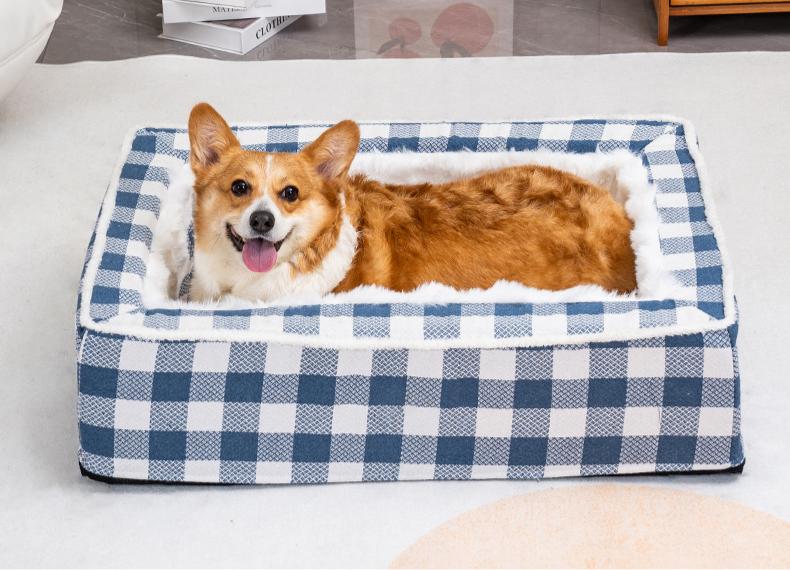
Restrictions imposed by the FDA on filling materials
- It is prohibited to use untreated waste cotton, linen and other fillings that may carry germs.
- All fillings must provide proof of origin and a pollution-free declaration.
- If feathers or down are included, they must undergo high-temperature disinfection and be accompanied by a test report.
FDA Factory Registration and Advance Declaration
- The manufacturer needs to complete the FDA factory registration and obtain the registration number.
- For each batch of pet beds, a “Prior Notice” must be submitted through the AMS system 24 hours before arrival at the port.
- Failure to declare or incorrect information will result in a 100% unpacking inspection directly.
CPSIA Lead/Phthalate Requirements
The U.S. Consumer Product Safety Improvement Act (CPSIA) imposes strict chemical restrictions on the materials that can come into contact with pet beds.
Total lead content limit value
- Surface coating: ≤ 90 ppm.
- Base material (such as plastic, metal fasteners): ≤ 100 ppm.
- A CPSC-approved third-party laboratory test report must be provided for each batch.
Restrictions on phthalates
- Prohibit the presence of eight substances including DEHP, DBP, BBP, DINP, DIDP, and DNOP. The concentration of each substance should be ≤ 0.1%.
- Special attention should be paid to small components such as printed patterns, soft pads, and zipper pulls.
The label language must be in English
All labels and packaging information must be in English, and the content must not be misleading.
Mandatory Label Elements
- Product Name (e.g. “Cotton Pet Bed”)
- Origin (e.g. “Made in China”)
- Manufacturer’s Name and Address
- Washing Instructions (if washable)
- Warnings (such as risk of small parts causing choking, if applicable)
Label Format and Position
- Permanent label: Sewed onto the inner side of the pet’s bed or on the tag.
- Font height ≥ 1/16 inch.
- Do not use symbols alone to replace the English description.
Chapter 2: Mandatory Requirements for the EU Market (For Reference Only)
If you also plan to export to the EU, understanding the differences can prevent repeated mistakes. This chapter provides a brief comparison.
CE safety and REACH chemical restrictions
The EU system is different from that of the US, but it is equally strict.
Requirements for the CE Mark
- If the pet bed has an electronic heating function (such as a heating pad), it must comply with the EMC and LVD directives.
- Although ordinary pet beds are not mandatory to obtain CE certification, they must meet the General Product Safety Directive (GPSD).
REACH Regulation
- Limit 197 high-priority substances (SVHC), and notifications are required if the concentration exceeds 0.1%.
- It is broader but deeper than CPSIA. For example, the restrictions on formaldehyde are stricter.
- It is recommended to provide a REACH test report to avoid risks.
Regulations on Pet Bed Labels: Differences between the United States and the European Union
This is a common long-tail keyword demand. We will directly compare the key points.
| Project | United States | European Union |
| Label Language | Only English | Official Language of the Destination Country (such as German, French) |
| Origin Labeling | “Made in China” | “Made in China” + Importer Information |
| Chemical Focus | Lead, Phthalates | Heavy metals, Formaldehyde, SVHC |
| Testing Standards | CPSIA + FDA | REACH + EN 71 (such as for toys) |
Chapter 3: General Rules for Product Labels
Regardless of whether it is for export to the United States or the European Union, the following rules apply universally.
The 6 types of information that the label must contain
1、Product Identification: SKU or Model
2、Fiber Composition (e.g. “100% Polyester”)
3、Maintenance Instructions (Washable / Not Washable)
4、Country of Origin
5、Contact information of the manufacturer or importer
6、Compliance statement (e.g. “Meets CPSIA lead limits”)
Label Durability Test
- Rub the label with a damp cloth for 15 seconds. The writing should not become blurred.
- After washing (if applicable), the label can still be read.
- Hui Zhou Longjie Technology Co., Ltd. recommends that you conduct a small-scale label wear test before production.
Chapter 4: Customs Clearance Procedures and Common Reasons for Detention
Understanding the procedures is key to avoiding pitfalls.
5 Steps for Import Clearance of Pet Homes from the United States
1、Submit the entry documents (bill of lading, commercial invoice, packing list)
2、Make an entry declaration through the ACE system
3、Be inspected by CBP (Customs and Border Protection Agency) (random or risk-based control)
4、If FDA or CPSC intervention is required, sampling tests will be conducted
5、Release or detain
Common Reasons for Penalties (Top 5)
- Lack of English labels
- Excessive lead content
- Failure to submit Prior Notice
- Incorrect origin marking
- Missing HTS code on the invoice (should use 9404.90.10)
How to avoid being penalized?
- Use batch pet cages suppliers that comply with the import regulations of the United States, such as Huizhou Longjie Technology Co., Ltd.
- Obtain the test reports from the CPSC-recognized laboratories before shipment.
- Image suggestion position 4: Insert a “Flowchart of Import Clearance in the United States”, with key nodes and risk points labeled.
Chapter 5: 5 Major Tips for New Importers to Avoid Pitfalls
A “Pet Nest Import Compliance Checklist” specifically designed for new importers.
Avoiding Pitfall 1 – Ignoring Small Part Testing
- The buttons, zippers, and plastic eyes on the pet bed must undergo a tensile test (≥10 pounds).
- Any detachment poses a suffocation risk and the entire batch must be recalled.
Avoid Pitfall 2 – Incorrect Use of Non-compliant Fillers
- Crushed sponge and recycled cotton must provide proof of being lead-free and free of polybrominated diphenyl ethers.
- It is recommended to use brand-new polyester fibers, which offer the lowest compliance cost.
Avoid Pitfall 3 – Label Obstruction or fallen off
- During packaging, the label must not be completely covered by the plastic bag.
- Use heat transfer or firmly sewn labels; reject heat-sensitive paper.
Avoid Pitfall 4 – Failing to Understand the Differences Between the US and the EU
- If you export to both the US and the EU, you must not use the same label.
- Design and package separately for different markets.
Free consultation
Huizhou Longjie Technology Co., Ltd. is a manufacturer that provides custom pet beds for American importers. We can provide a list of compliant pet beds.